On this page · 23 sections
Many business owners believe they have a lead generation problem. In reality, they usually have a funnel problem. They invest in Google Ads, SEO, Facebook Ads, LinkedIn Marketing, Content Marketing, and Social Media. Visitors arrive on their website. Some engage. Most leave. Very few become customers. The issue isn't always traffic. It's what happens after the traffic arrives. A well-designed lead generation funnel helps turn strangers into prospects, prospects into leads, and leads into paying customers. Without a funnel, even the best marketing campaigns can struggle to deliver a return on investment. Whether you run a service business, a consultancy or a growing company, a simple and effective lead generation funnel can dramatically improve your marketing performance. In this guide, you'll learn how to build a lead generation funnel that actually works in 2026 without unnecessary complexity, expensive software, or overly complicated automation.
What Is a Lead Generation Funnel?
A lead generation funnel is the process that guides potential customers from discovering your business to becoming a qualified lead and eventually a paying customer.
Think of it as a journey. Someone discovers your business through Google Search, Google Ads, Social Media, Referrals, Email Marketing, Online Directories, or Content Marketing. They then move through a series of stages before making a buying decision.
The purpose of a funnel is to make that journey as smooth as possible. Without a funnel, visitors arrive and leave. With a funnel, visitors move toward becoming customers.
Why Most Businesses Struggle With Lead Generation
Many businesses focus exclusively on traffic generation. They ask questions such as: How can we get more website visitors? How can we increase social media followers? How can we rank higher on Google?
These are important questions. However, traffic alone doesn't generate revenue. If your website receives 10,000 visitors per month but generates very few leads, the issue isn't traffic. The issue is conversion.
A properly designed funnel improves the percentage of visitors who take meaningful action.
Understanding the Modern Customer Journey
Today's customers rarely make immediate purchasing decisions. Before buying, they often research solutions, compare providers, read reviews, visit multiple websites, watch videos, read blog content, and request recommendations.
This means your business needs to provide value at multiple stages of the buying process. The modern funnel supports these different stages.
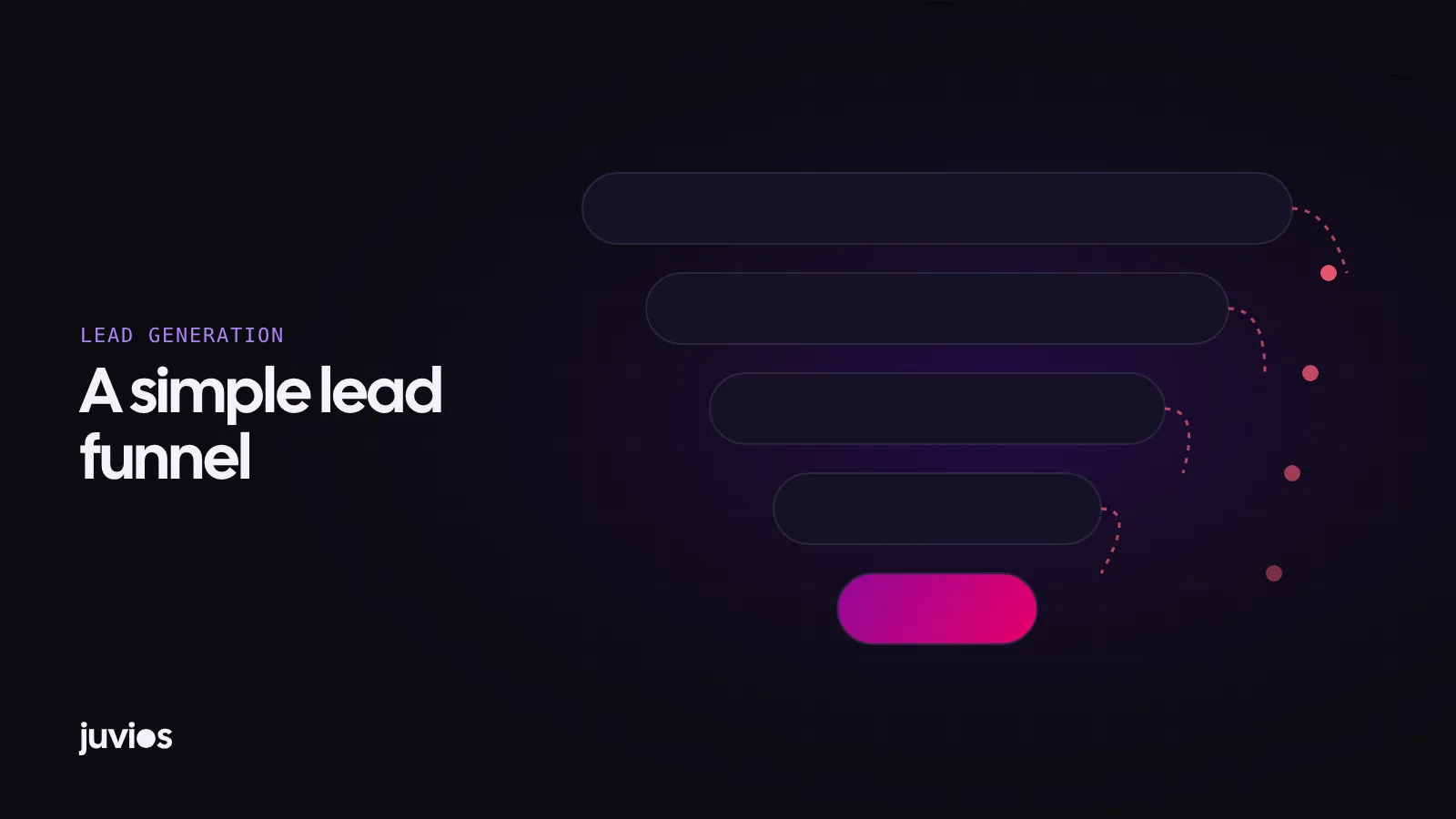
The Four Stages of a Simple Lead Generation Funnel
A highly effective lead generation funnel can be broken into four stages:
Stage 1: Awareness - Potential customers discover your business.
Stage 2: Interest - They engage with your content or offer.
Stage 3: Consideration - They evaluate your solution.
Stage 4: Conversion - They become a lead or customer.
Stage 1: Awareness - Getting Found by Potential Customers
The first step is attracting the right audience. If nobody knows your business exists, you cannot generate leads.
Search Engine Optimization (SEO) - SEO remains one of the most valuable lead generation channels because it attracts people actively searching for solutions. Visitors arriving through search often have strong intent. Learn more in our SEO services.
Google Ads - Google Ads provides immediate visibility. Unlike social media advertising, Google Ads reaches people already searching for specific products or services. See how we manage campaigns in our Google Ads services.
Content Marketing - Educational content helps attract prospects while establishing authority. Examples include blog articles, industry guides, how-to content, and case studies.
Social Media Marketing - Social media helps businesses increase visibility and reach new audiences. However, social media is often more effective for awareness than direct lead generation. Explore our social media marketing services.
Stage 2: Interest - Capturing Attention
Getting traffic is only the beginning. Once visitors arrive, you need to capture their interest.
Many websites fail because they immediately ask for a sale. Most prospects are not ready to buy on their first visit. Instead, focus on providing value.
What Visitors Want to Know: Can you solve my problem? Are you trustworthy? Do you have experience? Why should I choose you? Your website should answer these questions quickly.
Create a Clear Value Proposition
One of the most important elements of a lead generation funnel is your value proposition. Visitors should immediately understand what you do, who you help, and what outcome you deliver.
For example, instead of saying 'We are a full-service digital agency,' use 'We help businesses generate more qualified leads through SEO, Google Ads, and conversion-focused websites.' Clear messaging improves engagement and conversions.
A fast, conversion-focused website is essential - explore our website design services.
Use Lead Magnets to Capture Prospects
Not every visitor is ready to contact your business immediately. Lead magnets provide a reason for visitors to share their contact information.
Examples of Effective Lead Magnets: free website audit, SEO checklist, marketing strategy guide, industry report, consultation offer, ROI calculator, and template downloads. The best lead magnets solve a specific problem.
Lead magnets create a value exchange. The visitor receives useful information. The business receives contact details. This transforms anonymous website visitors into identifiable prospects. For many businesses, this significantly increases lead generation opportunities.
Stage 3: Consideration - Building Trust
Trust is one of the most important factors influencing buying decisions. People buy from businesses they trust. The consideration stage focuses on reducing uncertainty.
Trust-Building Elements - Testimonials provide social proof. Case studies demonstrate real-world results. Reviews improve credibility. Certifications increase trust. Client logos provide validation. Visitors often need reassurance before becoming leads.
Service-Specific Landing Pages - Many businesses send all traffic to their homepage. This reduces relevance. Instead, create dedicated pages for specific services such as SEO Services, Google Ads Management, Website Design, and Social Media Marketing. Dedicated pages improve both SEO performance and conversion rates.
Address Common Objections - Potential customers often hesitate because of unanswered concerns. How much does it cost? How long does it take? What results can I expect? What makes you different? Addressing these objections proactively improves conversion rates. Frequently Asked Questions sections can be highly effective.
Stage 4: Conversion - Turning Visitors Into Leads
At some point, prospects must take action. Your funnel should make this process easy.
Common Conversion Actions - Contact form submission, phone call, WhatsApp inquiry, consultation booking, demo request, and quote request. The easier the process, the higher the conversion rate.
Use Strong Calls to Action - Many businesses use weak calls to action such as 'Learn More' or 'Click Here.' Better examples include: Book a Free Consultation, Request a Quote, Speak to an Expert, or Get Your Free Website Audit. Specific calls to action generally perform better.
Keep Forms Simple - Long forms create friction. Ask only for information you genuinely need. Recommended fields: Name, Email, Phone Number, and Message. Reducing form complexity often improves conversion rates.
If visitors reach your site but don’t convert, this step-by-step diagnosis shows where they drop out.
Why Speed Matters in Lead Generation
Website speed affects every stage of the funnel. Slow websites typically experience higher bounce rates, lower engagement, and reduced conversions.
Visitors expect websites to load quickly. A delay of even a few seconds can negatively impact lead generation.
Speed Optimization Priorities - Fast hosting, optimized images, reduced code bloat, content delivery networks, and efficient website architecture. Performance should be treated as a conversion factor.
Mobile Optimization Is Essential
Most businesses now receive significant mobile traffic. Your funnel must work seamlessly across devices.
Mobile Best Practices - Responsive design, large buttons, click-to-call functionality, mobile-friendly forms, and fast loading pages. Poor mobile experiences often result in lost leads.
The Role of Email Marketing in a Lead Generation Funnel
Many leads will not convert immediately. Email marketing helps nurture prospects over time.
Effective Email Sequences - Welcome Email to introduce your business. Educational Content to provide value. Case Studies to demonstrate expertise. Offers to present relevant services. Follow-Ups to maintain engagement.
Email marketing remains one of the highest ROI marketing channels available.
Choosing a tool? See ActiveCampaign vs Mailchimp.
Using Marketing Automation
Marketing automation helps businesses manage leads more efficiently. Examples include automated emails, lead scoring, CRM integrations, appointment reminders, and follow-up sequences. Automation ensures prospects don't fall through the cracks.
Retargeting: Capturing Lost Opportunities
Most visitors will leave without converting. Retargeting helps re-engage them. Platforms include Google Display Network, Facebook, Instagram, and LinkedIn. Retargeting often produces lower acquisition costs because users are already familiar with your brand.
Measuring Funnel Performance
A lead generation funnel should be measurable. Track metrics such as: Website Traffic (how many visitors arrive?), Conversion Rate (what percentage become leads?), Cost Per Lead (how much does each lead cost?), Lead Quality (are leads qualified?), Customer Acquisition Cost (how much does it cost to acquire a customer?), and Revenue Generated (what business impact is being created?). Data allows continuous improvement.
Common Lead Generation Funnel Mistakes
Avoid these common issues:
No Clear Offer - Visitors don't understand what you're offering.
Weak Calls to Action - Prospects aren't guided toward action.
Poor Mobile Experience - Mobile users struggle to convert.
Lack of Trust Signals - Visitors remain skeptical.
Slow Website Speed - Users abandon pages.
No Follow-Up Process - Leads go cold.
Ignoring Analytics - Opportunities remain hidden.
A Simple Funnel Example for a Service Business
Let's consider a digital marketing agency. Awareness comes from Google Ads, SEO, and LinkedIn content. A visitor reads a blog article (Interest). They download a free SEO audit checklist (Lead Magnet). They receive educational emails and case studies (Consideration). Finally, they book a strategy consultation (Conversion). This simple funnel can generate consistent leads without requiring complex systems.
Lead Generation Funnel Strategies for Businesses in Sri Lanka, Australia, and the UK
While each market has unique characteristics, the fundamentals remain consistent.
Sri Lanka - Businesses often have significant opportunities to improve lead generation through SEO, Google Ads, and conversion-focused websites.
Australia - Higher advertising costs make conversion optimization especially important.
United Kingdom - Competitive markets require stronger positioning, trust-building, and lead nurturing strategies.
Regardless of location, businesses that build structured funnels typically outperform those relying solely on traffic generation.
What Lead Generation Looks Like in 2026
The most effective funnels today combine SEO, Google Ads, Content Marketing, Email Marketing, Automation, Analytics, and Conversion Optimization. Rather than relying on a single channel, successful businesses create systems that work together.
The goal is not simply generating traffic. The goal is creating predictable business growth.
Lead Generation Funnel Checklist
Before launching your funnel, ensure you have: Clear target audience, Strong value proposition, Traffic source strategy, Lead magnet, Landing page, Contact forms, Trust signals, Email automation, CRM integration, Retargeting campaigns, Conversion tracking, and Analytics reporting.
Final Thoughts
A successful lead generation funnel doesn't need to be complicated. In fact, the highest-performing funnels are often surprisingly simple. The key is guiding potential customers through a logical journey: Awareness, Interest, Consideration, and Conversion.
Businesses that build structured lead generation systems typically experience more qualified leads, lower acquisition costs, higher conversion rates, better marketing ROI, and sustainable growth.
At Juvios, we help businesses around the world build lead generation funnels that attract the right audience, convert visitors into leads, and turn marketing investments into measurable business growth. Whether you're starting from scratch or optimizing an existing funnel, a simple, well-designed system can transform the way your business generates new customers.
Ready to build a funnel that works? Book a free consultation or explore our services to see how we can help.
Common questions
01What is a lead generation funnel?
A lead generation funnel is the process that guides potential customers from discovering your business to becoming a qualified lead and eventually a paying customer, typically through awareness, interest, consideration, and conversion stages.
02Do I need expensive software to build a lead generation funnel?
No. Many effective funnels use simple tools: a website, a contact form, an email service, and basic analytics. Complexity is not required for success.
03How long does it take to see results from a lead generation funnel?
It varies by channel. Google Ads can generate leads within days. SEO and content marketing typically take several months. Email marketing and retargeting often show results within weeks.
04What is the most important part of a lead generation funnel?
Clarity. Visitors must immediately understand what you do, who you help, and what action to take. A clear value proposition and strong call to action often matter more than design or technology.
05Can a small business build an effective lead generation funnel?
Absolutely. In fact, smaller businesses often have an advantage because they can respond faster to leads, personalize communication, and adapt their funnel based on real feedback.